Helpful Tips to Apex Deck Builders Georgetown
DIY Deck Construction Guide: Advice for the Determined Homeowner
The DIY Deck Building Guide provides practical insights for homeowners looking to enhance their exterior living areas. It stresses the critical role of location, design, and material selection. Each step in the building process is essential for achieving a functional and aesthetically pleasing deck. Yet, many fail to recognize typical obstacles that may emerge during construction. Recognizing these difficulties can greatly impact the final outcome of the project. What key elements should homeowners review before getting started?
Selecting the Ideal Spot for Your Deck
When determining the perfect location for a deck, what elements should be evaluated? To begin with, the orientation of the sun plays an important role. A southward orientation can provide ample sunlight, perfect for unwinding, while a north-facing position might provide greater shade. Furthermore, assessing the landscape is vital; a even terrain streamlines the building process and boosts durability. Proximity to the house is a further essential element, as it facilitates access and encourages use. Moreover, regional zoning regulations and boundary lines must be examined to ensure adherence.
Garden elements, such as trees and shrubs, can offer privacy and visual appeal but may also need regular care. Finally, thinking about the primary purpose of the deck—whether for relaxing, dining, or entertaining—will determine its ideal location. By thoroughly evaluating these considerations, homeowners can identify a location that optimizes both pleasure and practicality.
How to Build an Effective Deck Design Plan
A comprehensive deck design plan is crucial for ensuring that the finished product meets both functional and aesthetic needs. Property owners should start by assessing their everyday needs, such as the planned functions of the deck—whether for entertaining, relaxation, or outdoor dining. It's necessary to think about the proportions and form of the deck in relation to the existing area, guaranteeing that it enhances the established architectural style and natural environment.
Next, property owners should create a blueprint that incorporates components like sitting spaces, guardrails, and embedded planters. This layout should prioritize ease of movement and accessibility, enabling comfortable passage. Furthermore, homeowners should account for compliance with local building codes and regulations.
Ultimately,integrating visual features like color palettes, materials, and light fixtures will improve the overall appearance. By carefully blending practicality with visual elements, a comprehensive deck planning strategy can greatly elevate outdoor living experiences.
Key Materials for Deck Construction
Selecting the right material options is a critical step in the deck building process, following the comprehensive design plan developed earlier. Homeowners must explore various options, including plastic, wood, and composite materials. Pressure-treated wood remains a widely preferred choice owing to its long-lasting nature and cost-effectiveness. Nevertheless, it needs regular maintenance to protect against decay.
Composite decking provides an easy-care solution, combining wood fibers and plastic, despite the fact that it often carries a higher starting price. For individuals who prefer a more natural appearance, natural hardwoods including teak or ipe provide exceptional longevity and beauty though they necessitate thoughtful maintenance and treatment.
In addition to decking boards, essential materials include robust posts, beams, and joists, which form the deck's structural framework. Hardware, including screws and brackets, should be selected according to material compatibility to ensure stability. Moreover, railings and balusters boost safety while introducing character to the deck's overall design.
Deck Building: Step-by-Step Instructions
When constructing a deck, having a clear grasp of the needed materials is vital to achieving success. A well-defined step-by-step method will lead individuals through every stage of the building process, making certain the resulting structure is both strong and safe. Moreover, it is important to prioritize safety precautions in order to protect all those involved in the construction process.
Materials You'll Need
Building a deck necessitates careful consideration of the resources needed to ensure strength and beauty. Property owners should start by choosing high-quality lumber, such as cedar, pressure-treated wood, or composite materials, which provide resistance to decay and insects. Fasteners and connectors, including brackets and galvanized screws, are essential for long-term strength. A weather-resistant coating or sealant will protect the wood from moisture and UV damage, extending its lifespan. Furthermore, homeowners will need concrete for footings and support posts, ensuring a solid foundation. Safety equipment, including goggles and gloves, is necessary for protecting oneself during construction. To complete the project, equipment such as a drill, circular saw, and level will streamline the construction process, making it faster and more accurate.
Step-by-Step Procedure
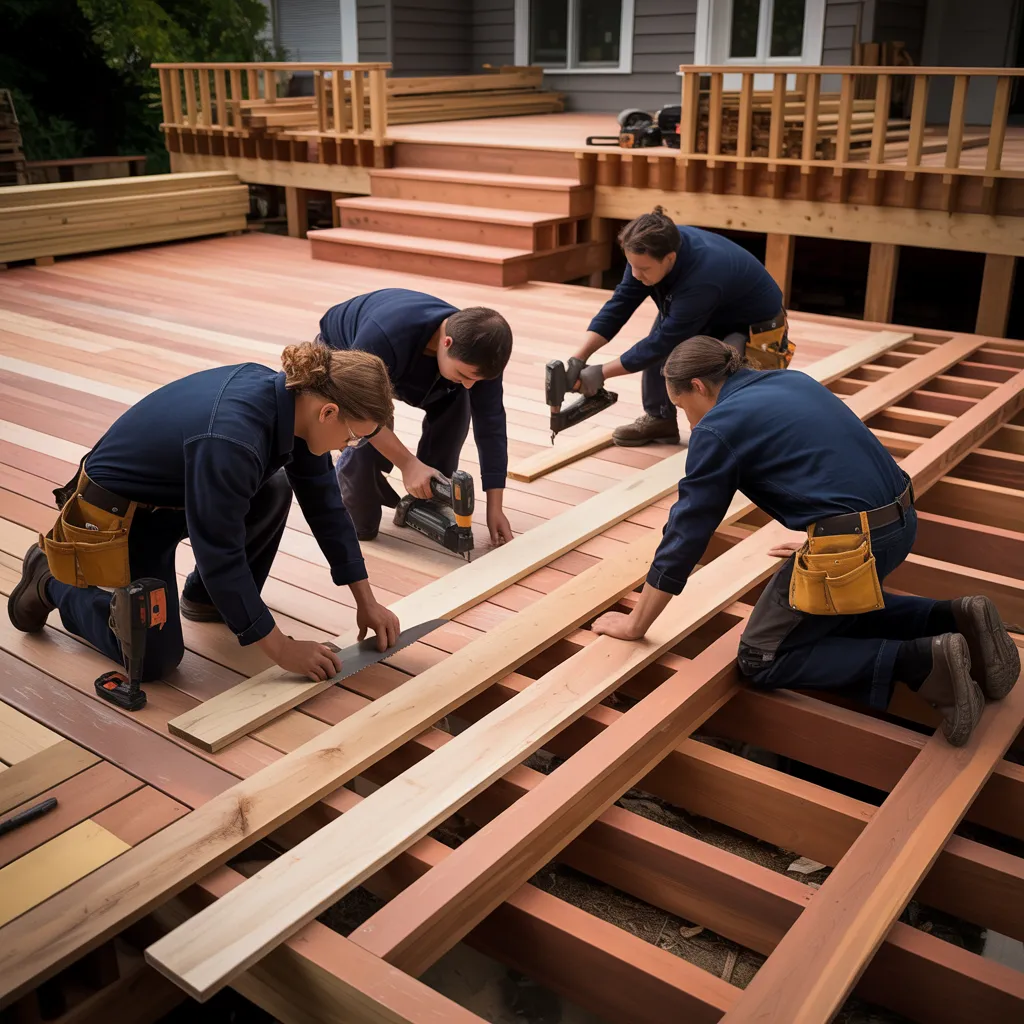
After gathering all essential materials, the subsequent stage consists of following a methodical plan for deck construction. The sequence starts with defining the perimeter using stakes and string to establish the deck's boundaries. Subsequently, the footings are prepared and concrete is applied to establish a firm foundation. Upon curing of the footings, the copyright board is secured to the house. After this step, the framing is assembled, incorporating joists positioned at equal intervals for stability. The decking boards are then installed transverse to the joists, fixed in place. Railing posts are placed at marked positions, and then the railing itself for both safety and visual appeal. Lastly, any concluding details, such as the application of stain or sealant, are added to boost resilience and visual appeal.
Safety Precautions Required
Prior to beginning deck construction, it is crucial to prioritize safety to minimize the risk of accidents and injuries. Homeowners should equip themselves with appropriate personal protective equipment (PPE), including safety goggles, work gloves, and solid footwear. Furthermore, ensuring the work area is properly secured is critical; this may require the use of barriers to prevent children and pets from entering the construction zone. Proper ladder usage is essential, along with making sure it is secure and properly placed. Homeowners must also be aware of their surroundings, particularly nearby overhead power lines. Additionally, maintaining well-organized and properly functioning tools can help avoid mishaps. Lastly, having a thorough knowledge of the materials and how to handle them will strengthen safety throughout the deck building process, contributing to a positive and secure final result.
What Not to Do When Building Your Deck?
Steering clear of common mistakes is access resource essential for a productive deck-building undertaking. A significant error involves failing to review local building codes and zoning regulations, which can lead to expensive penalties or mandatory changes. Moreover, overlooking the importance of proper drainage can result in pooling water that harms both the deck and adjacent spaces. A frequent mistake involves selecting substandard materials; this can weaken the deck's overall strength and longevity.
Insufficient support presents another serious concern; exceeding the deck's load capacity or skimping on joists can result in significant safety risks. Homeowners often overlook the importance of precise measurements, leading to uneven surfaces or components that are not properly aligned. At the end of the day, hurrying through the project often results in corner-cutting that diminishes durability. By avoiding these mistakes, homeowners can guarantee a safer, more durable deck that enhances their outdoor space.
How to Keep Your Deck in Great Shape for Years to Come
Caring for a deck necessitates a regular approach to safeguard its durability. Developing a routine cleaning program and undertaking seasonal inspections can significantly improve the service life of the structure. These methods serve to spotting potential concerns early and ensure the deck in top shape.
Standard Cleaning Schedule
A steady maintenance routine is essential for maintaining the appearance and integrity of a deck over time. Property owners should make an effort to clean their decks at least twice a year, ideally in the spring and fall. This schedule helps eliminate dirt, debris, and mold that can accumulate and lead to decay. Using a leaf blower or broom to remove loose debris is a straightforward first step. For deeper cleaning, a mixture of water and mild detergent can be applied with a soft-bristle brush, followed by complete rinsing. Close attention should be paid to areas around furniture and railings, where residue is more likely. Regular cleaning not only improves the deck's aesthetic but also extends its lifespan considerably.
Seasonal Inspection Tips
After establishing a routine cleaning regimen, property owners ought to emphasize routine seasonal assessments to guarantee the deck is maintained in peak condition. In the spring season, homeowners need to inspect for the effects of winter wear, which may include loose boards and cracked railings. Summer evaluations are centered on evaluating the integrity of the wood and ensuring that fasteners are secure. As autumn approaches, property owners need to remove debris and examine for mold or mildew, as these can develop in wet conditions. Additionally, inspections during winter ought to evaluate snow and ice accumulation, since these elements can place stress on the structure. Applying sealants and stains on a routine basis offers enhanced defense against environmental factors. By following these seasonal tips, property owners can prolong their deck's lifespan and maintain its aesthetic appeal.

Questions We Often Receive
Do I Need a Building Permit for a Deck?
Whether a permit is necessary for installing a deck varies based on local regulations. In most cases, homeowners should reach out to their city or county building department to identify specific requirements and ensure compliance with safety standards and zoning laws.
What Should I Look for When Choosing a Deck Contractor?
To find the right specialist for a deck, one should review qualifications, verify references, review estimates, guarantee proper certification, and consider communication skills. Trustworthiness and experience in deck building are essential for a productive project.
What Season Is Best for Deck Construction?
Spring and early autumn are regarded as the ideal seasons for deck construction. Low humidity and mild temperatures support productive construction work, while avoiding extreme weather conditions ensures materials bond correctly and improves the long-term durability of the project.
Is Building a Deck on a Slope Possible?
Absolutely, a deck is able to be built on a slope. However, proper planning and structural support are essential to guarantee durability and safety. Approaches like post-and-beam framing or terracing may be required for optimal results.
What Is the Best Way to Budget for My Deck Project?
To budget for a deck project, one should account for tools, materials, labor, permits, and unexpected costs. Creating a detailed estimate and allocating a contingency fund will assist in controlling expenses effectively throughout the building process.